Drive Ahead! - Fun Car Battles
- 4.3
- Rating
- 100.00M
- Installs
- Free
- Price

 Analysis by App-foxy
I went into Drive Ahead! - Fun Car Battles expecting a quick racing game, but its appeal is a little different from traditional lap-based racers. Instead of asking me to follow a clean circuit and chase the best time, it puts the focus on short car battles, awkward angles, risky jumps, and the satisfying moment when a small mistake sends an opponent flying. That makes it especially easy to pick up when I only have a few minutes.
It is a free racing game from Dodreams Ltd. with a deliberately stylized, pixel-inspired presentation. The game is rated for Everyone 10+, and it has reached over 100 million installs, which tells me it has found a broad audience beyond dedicated racing fans. Its average rating sits at 4.3 from around 1.6 million ratings, with roughly 70 thousand written reviews. Those figures do not replace personal experience, but they match my impression that this is a highly accessible game with a strong casual and multiplayer appeal.
The important question is not whether it is the most realistic racer on Android or iOS. It is not trying to be one. The better question is whether you want a compact, chaotic car game where positioning and timing matter more than realistic handling. If that sounds appealing, I think it deserves a serious look. If you want long races, detailed vehicle tuning, or a calm solo driving experience, another type of racing game will probably suit you better.
You May Also Like

 AccuWeather: Weather Radar
AccuWeather Review: A Quick, Clear Forecast for Everyday Decisions
For everyday plans, the best forecast is the one you can understand quickly. AccuWeather makes rain timing, radar, and local conditions easy to act on, with a few trade-offs.

 Hill Climb Racing
Why Hill Climb Racing Still Turns Crashes Into One More Run
A tiny car, a bumpy hill and one more upgrade: Hill Climb Racing keeps resurfacing because its simple chaos makes every near-miss feel personal.

 AliExpress - Shopping App
AliExpress Makes Global Shopping Feel Personal, but Shoppers Bear the Risk
AliExpress turns a global marketplace into a pocket-sized discovery engine. Its reach is useful, its shopping loop compelling, and its trade-offs easy to miss.

 Lords Mobile: Kingdom Wars
Lords Mobile Is a Kingdom-Building Routine, Not a Quick Match
A case-by-case verdict on the building, battles, device demands, and social commitments that make Lords Mobile rewarding for some players and exhausting for others.

 PDF Scanner app - TapScanner
TapScanner Makes Paperwork Easier to Capture, Check, and Share
TapScanner makes scanning with a phone feel less like a rescue operation and more like a dependable step in getting work done. Its capture tools are useful, though not flawless.

 Block Blast!
 Shows How Much a Puzzle Game Can Leave Out
A quiet grid game shows why puzzle players increasingly value instant clarity, repeatable skill and low-pressure play—and where the genre still needs to catch up.
More From Our News Desk
View All News


What to consider before choosing it
I’d use this section to weigh the game’s quick, collision-led matches against the kind of racing you usually enjoy. One practical point is to decide whether you want a game for occasional bursts or a main racing title: its compact format is convenient, but it asks you to enjoy unpredictable outcomes rather than steady lap-by-lap improvement. That distinction makes the comparison with other choices more useful.
The driving feels closer to a duel than a race
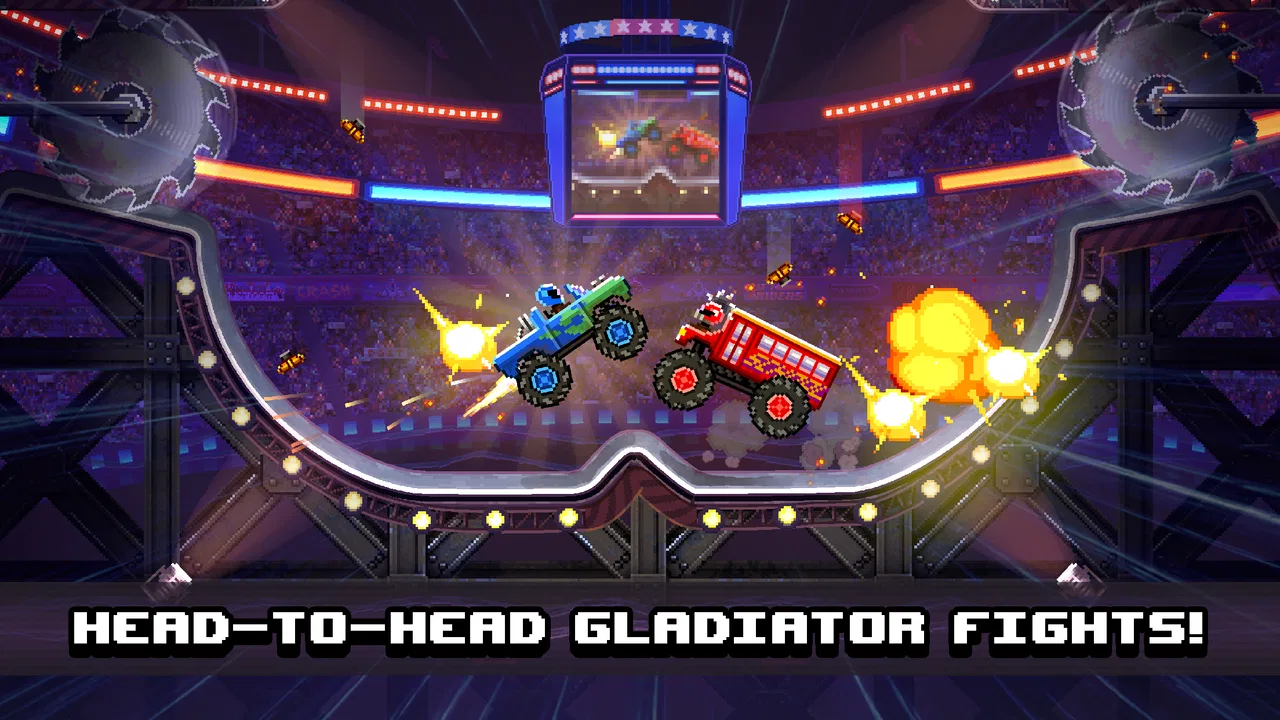
My first useful adjustment was to stop treating every match like a conventional race. The objective is generally about gaining an advantage in a confined arena, not smoothly completing a course. Cars bounce, flip, and collide in ways that can look ridiculous at first, but that unpredictability is part of the design. A vehicle that seems to be losing can suddenly land on an opponent, while a confident jump can turn into an embarrassing self-inflicted crash.
That changes how I play. I watch the shape of the arena, the available ramps, and the direction of the other car instead of simply holding the accelerator. A short pause can be more valuable than a reckless charge. In several matches, waiting for the opponent to commit gave me a better opening than trying to attack immediately. The best results often come from controlling the collision rather than chasing speed.
This is also why the game can be enjoyable for people who do not normally spend time with racing games. You do not need to memorize a long track or understand realistic suspension behavior. The basic idea is readable very quickly: move, turn, jump, and try to make the other vehicle lose control. The deeper challenge comes from learning when each action is safe.
Controls are simple, but the physics take practice
The controls are easy to understand, yet the cars do not always behave in the neat, predictable way that a conventional racer might. That is not necessarily a flaw, but it does create a learning curve. I had to get used to how quickly a car can rotate, how a landing changes the next move, and how a small difference in approach can decide a battle.
New players may initially blame the controls when a car flips or misses a landing. In my experience, the bigger issue is usually timing. Pressing a direction for too long can create a bad angle, while tapping at the right moment can keep a vehicle stable. I found it useful to treat the first few matches as practice rather than judging the game immediately.
There is a nice trade-off here. The physics create memorable moments and give experienced players room to improve, but they can also feel unfair when the action becomes crowded. Anyone looking for precise, simulation-style control should know that this game values spectacle and quick reactions over technical realism.
Short sessions are one of its strongest practical advantages
A realistic everyday use case is a commute, a queue, or a short break when I want something interactive without committing to a long event. I can play a few battles, put the phone away, and return later without feeling that I abandoned a major race halfway through. That makes it more convenient than many traditional racing games, where the fun depends on completing longer tracks or managing a larger career structure.
It also works well as a pass-and-play game with someone nearby. The confrontational format is easy to explain: each person wants to outmaneuver the other, and the match produces an immediate result. I would choose it for a casual gathering before choosing a serious racing simulator, because the action is understandable even when someone is seeing it for the first time.
At the same time, short sessions can become repetitive if I play for a long stretch without changing my approach. The game is strongest when I enjoy experimenting with movement and reacting to unpredictable situations. It is less satisfying if I need a carefully structured campaign to keep me engaged.
Presentation favors personality over realism
The stylized pixel racing look gives the game a clear identity. Cars and arenas feel designed for quick recognition rather than photographic detail, and the exaggerated collisions fit that visual language. I like that the presentation does not pretend to be a serious motorsport experience. It supports the playful tone and makes a chaotic crash feel like part of the entertainment instead of a technical failure.
This style also helps when the screen becomes busy. A realistic game can make it difficult to read fast-moving objects during a collision, while the simplified appearance here keeps the important action relatively easy to follow. The trade-off is that players who choose racing games mainly for detailed car models, authentic tracks, or a cinematic atmosphere may find it visually lightweight.
Why the large audience matters, and what it does not prove
Seeing more than 100 million installs and a 4.3 average rating makes me more comfortable recommending it as a game worth trying, especially because it is free to start. The audience size suggests that the basic loop is approachable and that the game has lasting recognition among mobile players.
Still, popularity should not be confused with universal appeal. A game can be widely installed and still be wrong for someone who dislikes arcade physics or competitive collisions. I would use the audience figures as a reason to test it, not as a reason to assume it will replace every other racing game on your phone.
How the free model affects the decision
The game is free, which removes the biggest barrier to trying it. It includes in-app purchases ranging from $0.49 to $99.99 per item, so I would approach the purchase system with a clear personal limit. Someone who is happy to enjoy the core experience without spending may find the free entry point attractive. Someone who dislikes seeing optional purchases in a game should think about that before investing time.
My advice is simple: play enough to decide whether the battles themselves are fun before considering any purchase. Spending money cannot fix a mismatch between your preferred racing style and this game’s physics. If you already enjoy the short-match format, optional purchases may feel more relevant; if you do not, they are not a reason to continue.
Device compatibility and the practical starting point
The listed minimum operating system is Android 6.0, so the game is aimed at a wide range of compatible devices rather than only recent phones. The current version is 5.1.21. Before installing, I would still make sure the phone has enough free space and that the operating system is supported, especially on an older device.
Because this is a fast-moving game, a responsive screen and stable performance matter more than having a premium camera or an unusually large display. On a smaller phone, the action can feel concentrated and immediate. On a larger screen, the arena may be easier to read, but the game does not depend on a high-end visual presentation to be enjoyable.
Where it wins against other racing choices
I’d focus here on the specific mood it serves better than conventional racers: spontaneous, head-to-head car confrontations that are easy to start without preparing for a long event. Its advantage is not realism or a deeper career, but the way positioning and timing can turn a brief match into a lively contest. The next comparison helps clarify when that trade-off is worth making.
It is more immediately playful than a simulator
When I compare it with realistic racing games, its biggest advantage is the speed at which it becomes entertaining. A simulator may reward careful braking, line selection, vehicle setup, and long-term improvement. Those are worthwhile systems, but they also demand more patience. Here, the fun begins with a simple confrontation and grows through better timing.
I would choose this game over a simulator when I want a quick laugh, a spontaneous challenge, or a match that does not require preparation. I would choose the simulator when I want to study tracks, refine a driving technique, or feel connected to realistic motorsport. Neither approach is automatically better; they serve different moods.
It offers more interaction than a standard time trial
Many mobile racing games center on beating a clock or improving a personal score. That can be satisfying, but it is a solitary kind of competition. The battles here create a more direct relationship between my decisions and another vehicle’s behavior. I am not merely trying to be faster; I am trying to make the other driver choose badly.
That makes each encounter feel more personal, even when the result depends partly on chaotic movement. The downside is that players who prefer a clean measure of skill may dislike the uncertainty. A time trial usually tells me exactly where I lost time. A collision-based match can leave me wondering whether I made a bad decision, got a poor angle, or simply suffered an unlucky bounce.
It is easier to share than a deep career racer
For casual multiplayer situations, the compact battle format is a real strength. I do not need to explain a complicated progression system before someone can participate. I can hand over the phone or describe the basic goal, and the other person can understand the appeal quickly.
This is where it stands out from many career-focused racing games. Those games may provide more long-term structure, but they are often less suitable when two people want entertainment immediately. The trade-off is that a player seeking a rich solo journey may find this format less emotionally rewarding than a game built around championships, upgrades, and persistent progression.
Its visual identity helps it avoid feeling like a generic racer
The pixel-styled presentation and exaggerated car battles give it a recognizable personality. I do not confuse the experience with a conventional track racer because the arenas, collisions, and movement all support the same playful idea. That consistency matters: the game knows what kind of fun it wants to provide.
However, the same identity narrows its audience. If your ideal racing game is built around licensed vehicles, realistic scenery, and a serious driving atmosphere, this will feel intentionally modest. I would not recommend switching from a realistic favorite unless you specifically want a more chaotic alternative.
Three techniques that improved my results
The first technique is to use the arena as a weapon. Instead of aiming only at the opponent, I look for ramps, edges, and landing zones that can force an awkward angle. A jump is not automatically an attack; sometimes it is better used to reposition and avoid giving the other car an easy target.
The second is to avoid constant movement. Holding a direction continuously can make a car look active, but it may also remove the ability to react. I had better results using brief inputs, watching the opponent’s approach, and changing direction after the other car committed. This is especially useful for players who feel that the physics are too slippery at first.
The third is to review the cause of a loss before immediately starting another match. I ask whether I attacked too early, landed badly, or allowed the opponent to control the center of the arena. That small pause turns random-looking defeats into practice. It is a better way to improve than simply playing faster and repeating the same mistake.
When another category is a better fit
I would steer you toward a traditional arcade racer if you mainly want to complete laps, overtake a field, and compare finishing times. I would suggest a simulation-focused game if realistic handling and vehicle control are your priorities. A kart-style racer may be better if you want power-ups and a more predictable track structure. A management or career racer may suit you more if long-term progression is the main reason you play.
Those alternatives can provide clearer goals than this game. The reason to choose this one is not completeness; it is the focused pleasure of turning car movement into a compact contest. If you find yourself asking for more detailed tuning, longer events, or a calmer driving rhythm, that is a sign that you have reached the edge of what this particular format offers.
The real cost of switching from a familiar racer
Switching to this game does not mainly cost money, since it is free to download. The bigger cost is changing your expectations. A player accustomed to braking before corners may need to learn that a collision, flip, or sudden reversal can be the central event rather than an error to avoid. It takes a little time to accept that control is partly about managing instability.
There is also a social cost if your friends prefer a different racing style. This game is easiest to recommend when the people around you enjoy quick, playful competition. If they want a serious leaderboard or a long multiplayer race, you may need to explain why the battles are fun rather than assuming the format will speak for itself.
My practical switching plan would be to install it without deleting your usual racer, play several short sessions, and notice what you miss. If you keep thinking about track length and realistic handling, keep the other game as your main choice. If you start anticipating clever landings and rematches, this one has probably earned a place beside it.
Who should install it
I recommend it to players who enjoy arcade racing, quick competitive rounds, and physics-driven surprises. It is a strong choice for a short break, a casual challenge with another person, or anyone who likes learning through repeated attempts rather than following a long tutorial. It is also a good introduction to a different kind of racing game for people who normally avoid realistic driving titles.
Parents and younger players should pay attention to the Everyone 10+ rating and decide whether the collision-focused action is appropriate for their household. The presentation is playful, but the game is still built around battling vehicles, so the age guidance is worth considering rather than ignoring.
Who should skip it
I would skip it if you want a quiet, predictable, and technically precise driving experience. I would also hesitate to recommend it to anyone who becomes frustrated by physics that can produce surprising outcomes. The game asks you to accept a degree of chaos, and no amount of practice will turn it into a realistic simulator.
Players who dislike free games with in-app purchases should also make that part of the decision before starting. The available purchase range extends from $0.49 to $99.99 per item, so I would use device-level spending controls or a personal budget if younger players will access the game.
My recommendation after playing it
Drive Ahead! - Fun Car Battles is worth installing if you want racing that behaves more like a series of compact car duels than a conventional motorsport event. I like its fast sessions, readable visual style, and the way a match can change because of one well-timed movement. The game is at its best when I stop demanding perfect control and start treating the arena, the jump, and the opponent’s impatience as parts of the strategy.
I would not call it the definitive racing game for every mobile player. Its physics can frustrate, its battles may feel repetitive during extended sessions, and its free-to-play structure deserves a little awareness. Still, those limitations are balanced by a clear identity and an unusually accessible format. With Dodreams Ltd. behind it, a free starting point, a current version of 5.1.21, and support beginning at Android 6.0, it is easy to test without making a major commitment.
My final advice is to give it a fair trial during a short break, not during a marathon session. Learn to wait, use the arena, and treat failed landings as information. If that style of competition makes you smile, you will probably find a surprisingly deep little racer beneath the simple controls. If you are searching for realistic cars and orderly circuits, choose a different category and save this one for the day you want your racing game to be gloriously unpredictable.
FAQs for Drive Ahead! - Fun Car Battles
01What is the main objective of Drive Ahead! - Fun Car Battles?
Drive Ahead! is a thrilling car battle game where players aim to knock their opponents' helmets off using a variety of vehicles. The game combines skill and strategy as players navigate through different arenas filled with obstacles and power-ups. The goal is to outmaneuver and outsmart opponents to achieve victory.
02Is Drive Ahead! suitable for all age groups?
Drive Ahead! is designed for a wide audience, but it’s best suited for players aged 10 and up due to its cartoonish violence and competitive nature. Parents should be mindful of in-app purchases and online interactions when younger players are involved. The game’s colorful graphics and simple controls make it accessible and engaging for both kids and adults.
03What are the in-app purchases available in Drive Ahead!?
Drive Ahead! offers several in-app purchases that enhance the gaming experience. Players can buy coins and gems to unlock new vehicles, helmets, and arenas. There are also special offers and seasonal items available for purchase. While the game is free to play, these purchases can provide an advantage and add more fun to the gameplay.
04Can Drive Ahead! be played offline?
Yes, Drive Ahead! can be enjoyed offline. Players can engage in single-player missions and local multiplayer matches without an internet connection. However, features like online multiplayer and leaderboards require an internet connection. Offline play is perfect for quick battles or when internet access is limited.
05How does multiplayer work in Drive Ahead!?
Drive Ahead! features both local and online multiplayer modes. In local multiplayer, two players can compete on the same device. The online mode allows players to battle against others worldwide, competing in real-time matches. Players can also join or create teams, participate in special events, and climb leaderboards to showcase their skills.
Pros
- Exciting multiplayer mode for intense battles.
- Wide variety of vehicles to unlock and use.
- Frequent updates with new content and features.
- Colorful and dynamic graphics enhance gameplay.
- Simple controls make it accessible for all ages.
Cons
- In-app purchases can be quite expensive.
- Ads may interrupt gameplay frequently.
- Some levels can feel repetitive over time.
- Requires internet for certain features.
- Occasional bugs can disrupt the experience.

Drive Ahead! - Fun Car Battles
Gallery